



Report from the review of the MAX laboratory
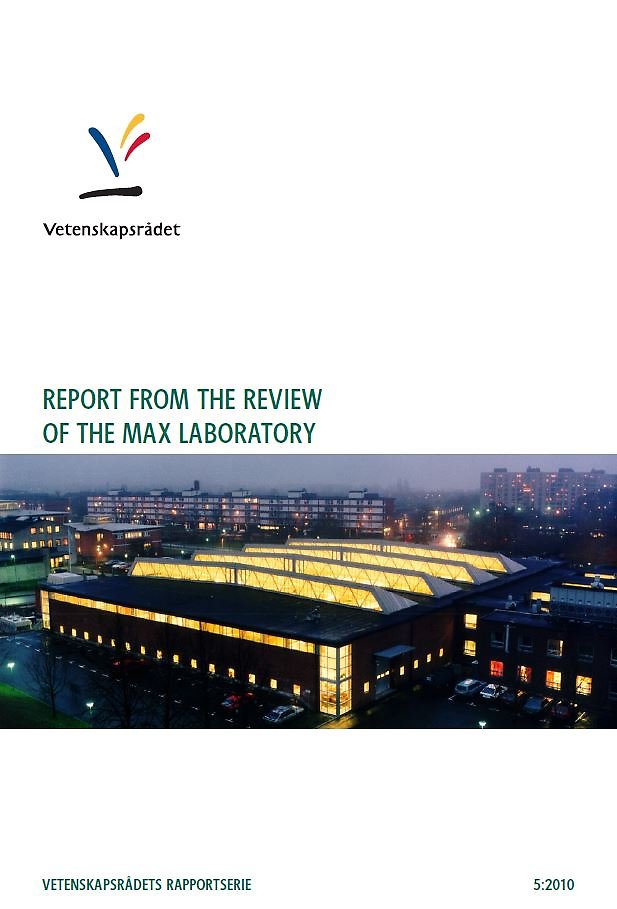
Environments surrounding outstanding infrastructures are not only essential for the advancement of science; they also generate innovation, influence social climate, and attract talent. Also, corporations with needs for high-level expertise prefer to establish themselves near these research environments.
The Swedish Research Council´s Guide to infrastructure provides an overview of the long-term needs for research infrastructures to enable Swedish research of the highest quality in all scientific fields. In particular, it addresses new infrastructure proposals that have achieved a sufficiently high level of scientific and technical maturity that it is time to decide whether or not to implement them.
This report updates the first version of the Swedish roadmap for research infrastructures, published in 2006. Research infrastructures include, e.g. central or distributed research facilities, databases, and extensive data networks.
MORE WITHIN THE SAME SUBJECT AREA
-
Article |
Published 8 April 2024
Are you doing research in computational science? Then you can apply for access to Swedish and European computational resources at NAISS and EuroHPC. Here you can read more about how to do this.
Keywords:
-
Infrastructures |
Published 25 March 2024
ArchLab is a distributed research infrastructure that coordinates a number of laboratories that use natural science methods to tackle archaeological questions. The infrastructure is under construction and is coordinated from Umeå University.
Keywords:
-
News |
Published 12 February 2024
The Government is making a change to the Swedish Research Council’s instructions, which means that we can fund research infrastructure of national interest for a longer period, extending from the current 6 years to 10 years. The purpose is to improve...
Keywords: